
The Role of Inflammation in Follicle Damage
How chronic scalp inflammation disrupts follicle function and contributes to thinning and shedding.
Introduction
Inflammation is the body's natural response to injury, irritation, or perceived threat. In short, controlled bursts, it is a protective mechanism, one that supports healing and helps the body restore balance. The concern arises when inflammation becomes chronic: quietly persistent, often unnoticed, and continuously active in the background of scalp tissue.
On the scalp, this kind of sustained inflammation is one of the most clinically significant contributors to progressive hair loss. It rarely produces dramatic symptoms in its early stages, which is part of why it is so frequently overlooked. By the time visible thinning or shedding raises concern, the inflammatory environment has often been influencing follicle health for months or longer.
Understanding how inflammation affects the follicle, and why it cannot be addressed in isolation, is essential to understanding why some hair loss patterns persist despite consistent care.
How Inflammation Affects Hair Follicles
The hair follicle is a complex, biologically active structure that depends on a stable environment to function properly. It cycles through phases of growth, rest, and renewal, all of which are sensitive to disruption. When inflammatory activity is sustained around the follicle, it begins to interfere with the cellular processes responsible for that cycle.
Inflammatory cells release signaling molecules that can shorten the growth phase, prolong the resting phase, and reduce the follicle's ability to produce healthy hair. Over time, this disruption can lead to finer strands, slower regrowth, and a steady increase in shedding.
In more advanced cases, sustained inflammation can affect the structures responsible for follicle regeneration. When that happens, the changes become more difficult to reverse, and patterns of loss can become permanent.
Signs of Inflammation-Related Hair Issues
Chronic scalp inflammation does not always announce itself clearly. Acute inflammation is easy to identify, visible redness, swelling, or obvious discomfort. Chronic inflammation tends to present in subtler ways that are easy to dismiss.
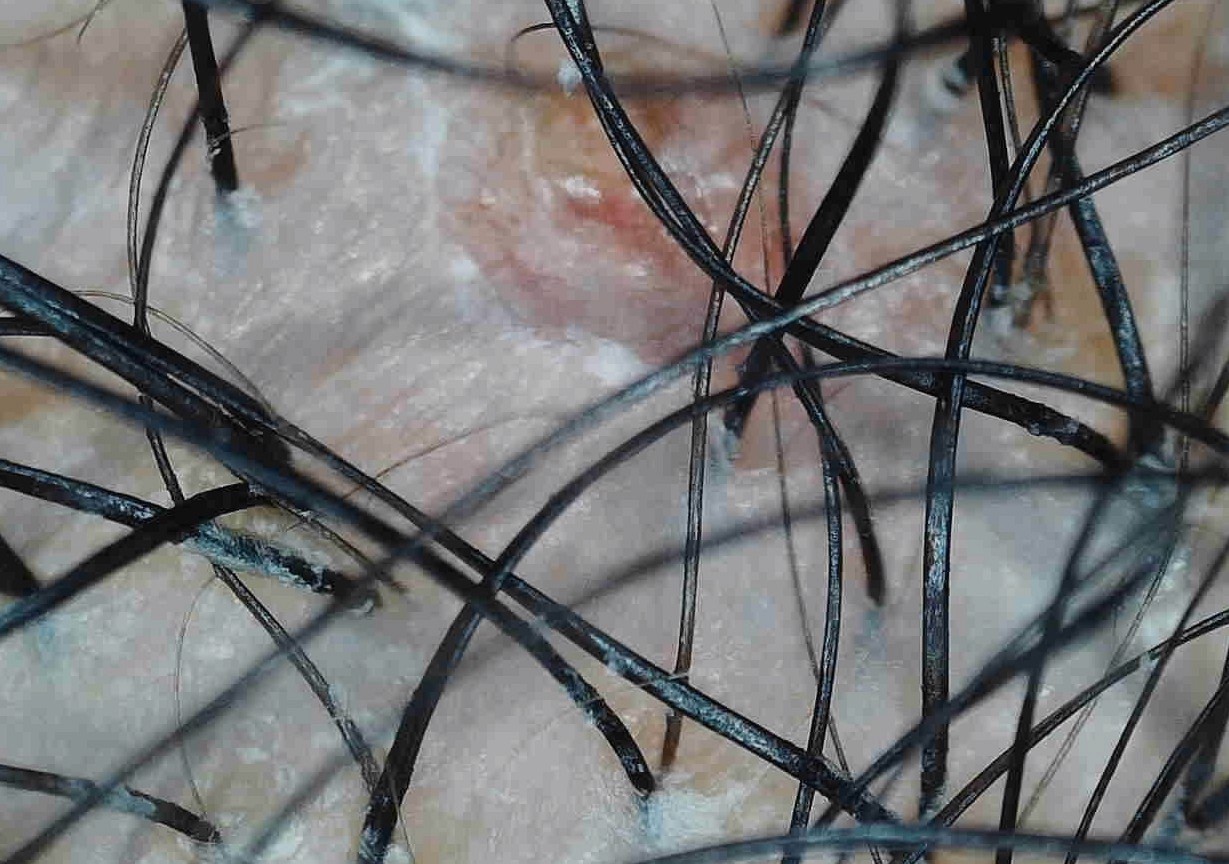
Common indicators include mild tenderness, occasional or recurring itching, low-grade scaling or flaking, sensitivity to touch, and a persistent sense that the scalp feels uncomfortable without an obvious cause. Some clients also notice increased shedding, changes in hair texture, or thinning that develops gradually rather than suddenly.
Individually, these signals may seem minor. Together, and over time, they often point to an underlying inflammatory process that warrants closer evaluation.
Why Treating the Scalp Alone Is Not Enough
It is tempting to view scalp inflammation as a localized problem that can be resolved with topical care. In many cases, that approach provides only partial relief. While calming the surface of the scalp can reduce discomfort, it does not always address the underlying factors driving the inflammation.
Chronic scalp inflammation can be influenced by a wide range of contributing factors, including styling tension, product buildup, internal health conditions, hormonal shifts, and stress. When the underlying drivers are not identified, inflammation tends to return, often quietly, even after symptoms appear to improve.
This is why a structured evaluation is necessary. Without understanding what is sustaining the inflammatory response, treatment becomes a cycle of temporary relief rather than meaningful stabilization.
Long-Term Impact on Follicle Viability
The longer chronic inflammation persists, the greater the cumulative impact on follicle health. Early on, follicles may continue to function despite the inflammatory environment, though often less efficiently. Over time, that environment can compromise the structures the follicle relies on to regenerate.
When follicle viability is reduced, hairs may grow finer, cycle less effectively, or fail to regrow after shedding. In some cases, follicular activity slows to the point where visible density is noticeably affected. In more advanced presentations, the changes can become structural and resistant to reversal.
This progression is part of why early recognition is so important. Addressing inflammation while the scalp is still responsive, rather than after long-term damage has accumulated, significantly influences what stabilization is realistically able to achieve.
In Closing
Inflammation is rarely the only factor in hair loss, but it is often the one that quietly undermines every other effort to restore scalp and hair health. Recognizing its role is essential to understanding why progress sometimes stalls despite consistent care.
Addressing the scalp environment is not optional. It is the foundation that determines whether long-term stability is achievable, and it requires more than topical attention alone.
If you are experiencing ongoing hair or scalp concerns, the next step is a structured evaluation to determine the underlying cause.
Apply for Evaluation