
Why Black Women Are Experiencing Increased Hair Loss
A closer look at the contributing factors behind rising hair loss, including tension, inflammation, and improper scalp care.
Introduction
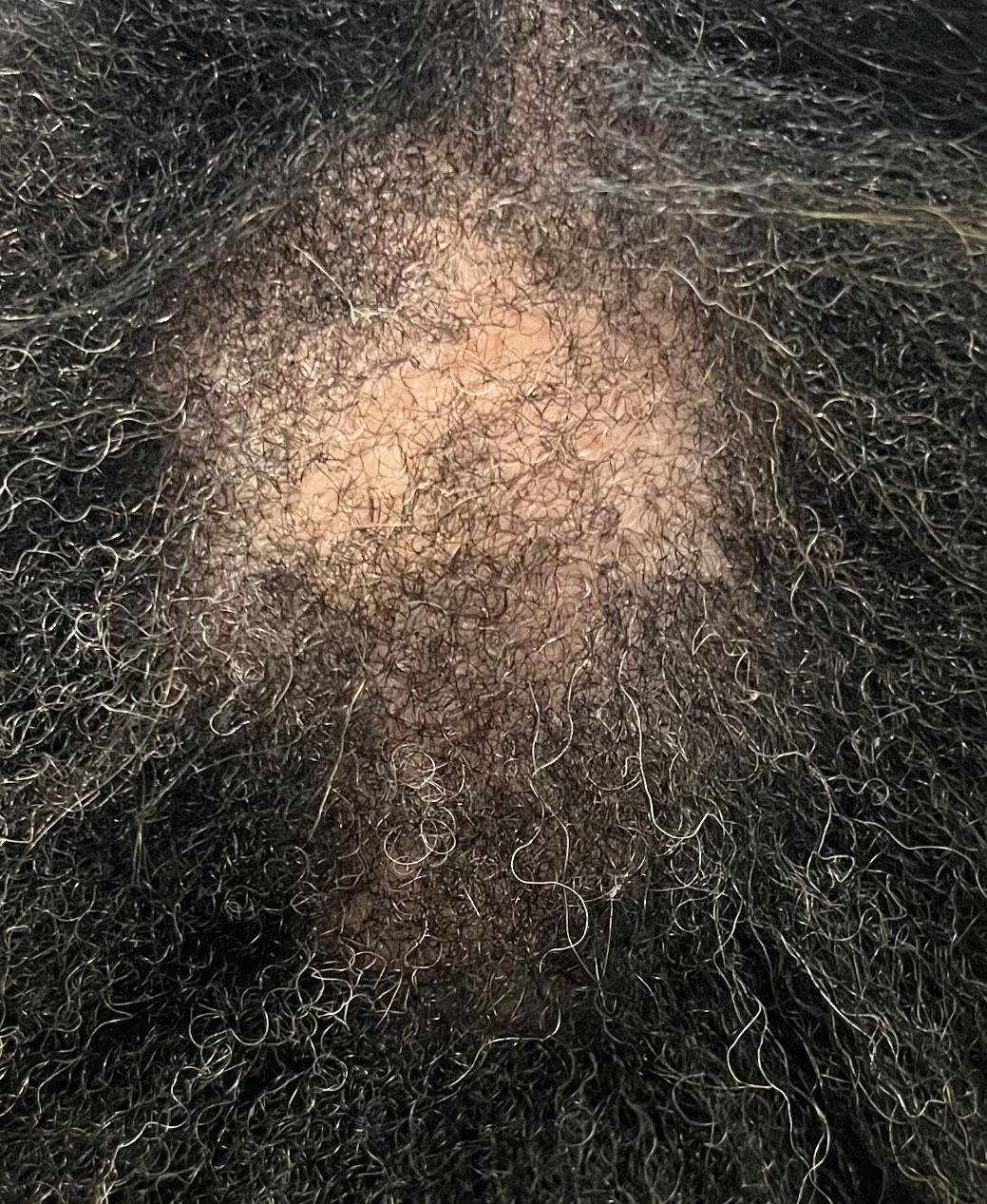
Hair loss among Black women has become an increasingly common clinical concern, and the patterns we observe rarely point to a single cause. In most cases, what presents as thinning, shedding, or gradual recession is the result of multiple overlapping factors that have been developing quietly over time.
Understanding why this is happening requires moving beyond cosmetic explanations and looking at the scalp as a living, reactive environment. The factors driving these changes are often interconnected, and addressing them requires awareness before intervention.
Mechanical Stress and Long-Term Tension
One of the most consistent contributors we observe is repeated mechanical stress placed on the hairline and scalp. Tight styling, heavy installations, and prolonged tension can gradually compromise follicle integrity, especially in areas already vulnerable to thinning.
Traction-related changes often develop slowly, which is part of why they are frequently overlooked. Clients may not connect early symptoms, small bumps, tenderness, or perimeter thinning, to the styling patterns that produced them. By the time the changes become visually obvious, the follicles in those areas have often been under stress for an extended period.
Chronic Inflammation as a Hidden Driver
Inflammation is one of the most under-recognized contributors to progressive hair loss. Unlike acute irritation, which resolves quickly, chronic low-grade inflammation can persist for months or years without producing dramatic symptoms.
On the scalp, this sustained inflammatory state interferes with the environment the follicle depends on to function. Over time, it can disrupt the structures responsible for regenerating hair and contribute to patterns of thinning that are not easily reversed once advanced.
Improper Scalp Care and Misdirected Routines
Many hair care routines are built around the hair shaft rather than the scalp itself. When the scalp is neglected, through buildup, infrequent cleansing, or the use of products that aggravate the skin, the foundation for healthy hair is compromised.
In other cases, the issue is not neglect but misdirection. Treatments intended to address one concern can inadvertently worsen another, particularly when applied without first understanding the underlying scalp condition.
Systemic and Hormonal Influences
Hair is highly responsive to internal changes. Hormonal shifts, nutritional gaps, stress, and certain medical conditions can all influence the hair growth cycle. These factors often act quietly in the background, contributing to shedding or thinning that may appear unrelated to anything specific.
Because these influences are systemic, they cannot be resolved through topical care alone. Recognizing their role is part of why a structured evaluation is necessary before assuming any single cause.
In Closing
The rise in hair loss among Black women is not the result of one issue, and it is rarely solved by a single product or service. What it requires is a clear understanding of what is happening at the scalp level, and a willingness to address contributing factors before pursuing cosmetic correction.
Awareness is the first step. Without it, well-intentioned routines and styling choices can continue to reinforce the very patterns they were meant to prevent.
If you are experiencing ongoing hair or scalp concerns, the next step is a structured evaluation to determine the underlying cause.
Apply for Evaluation